
This case study shows how MedPharm reduced API concentration in a topical formulation while maintaining drug performance. By optimizing excipient composition and improving thermodynamic activity, the team achieved equivalent skin permeation, reduced cost of goods, and supported successful clinical development and commercialization.
Blog: Unlocking the Potential of Nasal Drug Delivery: Strategies for Formulation Success
Technical Blog
Published: November 2025
Authors: Dr. Jon Lenn, Dr. Charles Evans, and Dr. Jon Volmer
Advancing Nasal Drug Delivery Through Formulation Strategy
Nasal drug delivery is an increasingly important route of administration for local and systemic therapies, including treatments for allergic rhinitis, migraines, vaccines, and central nervous system disorders. Compared with oral and injectable dosage forms, nasal delivery can offer rapid absorption, non-invasive administration, and improved patient adherence. However, the nasal cavity presents significant biological barriers that can limit drug residence time and absorption.
In this technical blog, MedPharm explores practical strategies for overcoming nasal delivery challenges, including formulation design considerations, device compatibility, and the use of advanced preclinical models to support successful development.
What’s Covered in This Technical Blog
- Why nasal drug delivery continues to gain momentum across multiple therapy areas
- Key anatomical and physiological barriers that impact nasal absorption
- Strategic considerations for solution versus suspension-based formulations
- The role of formulation characterization in improving residence time and performance
- How advanced nasal models can help de-risk development and accelerate timelines
📥 Access the Full Blog
Complete the form to read the full blog and learn how MedPharm helps developers unlock the full potential of nasal drug delivery through proven formulation strategies and innovative preclinical tools.
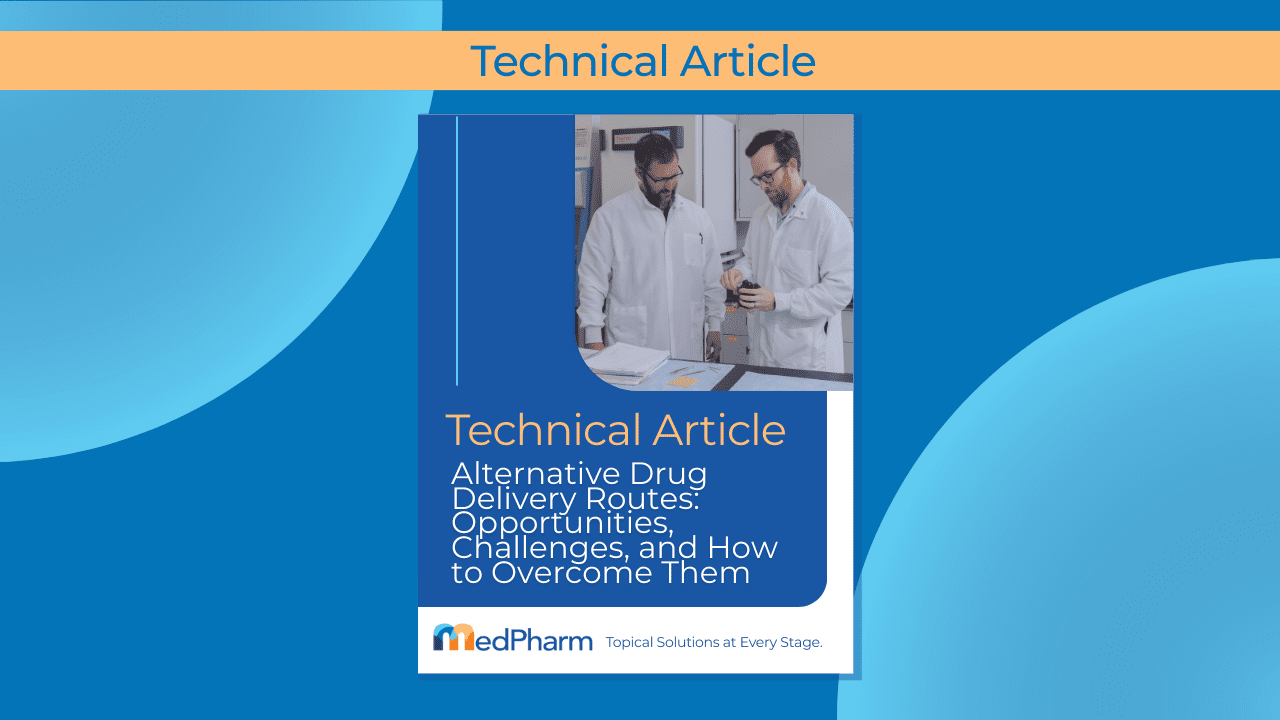
Article: Alternative Drug Delivery Routes: Opportunities, Challenges, and How to Overcome Them
Nasal Drug Delivery: Opportunities, Challenges, and Formulation Strategies
Technical Article
Published: September 2025
Authors: Dr. Jon Lenn, Dr. Charles Evans, Dr. Jon Volmer
Advancing Alternative Drug Delivery Through Scientific Expertise
Nasal drug delivery is an increasingly important route of administration for local, systemic, and central nervous system therapies. Compared with oral and injectable dosage forms, nasal formulations can enable rapid onset of action, reduce systemic exposure, and improve patient adherence. However, biological barriers, rapid clearance mechanisms, and device-dependent delivery introduce formulation challenges that require specialized expertise.
In this technical article, MedPharm examines key considerations for nasal drug delivery within the broader context of alternative topical and transepithelial routes of administration. The article highlights route-specific challenges, formulation and device strategies, and the role of preclinical models in de-risking development and accelerating timelines.
What’s Covered in This Technical Article
- Core principles of nasal drug delivery and biological barriers
- Common formulation challenges and development considerations
- Strategies to optimize residence time, absorption, and targeting
- The impact of formulation–device interactions on delivery performance
- How preclinical nasal models support formulation selection and reduce risk
📥 Download the Technical Article
Complete the form to access the full technical article and explore MedPharm’s approach to nasal drug delivery and alternative routes of administration.
Nasal Technical Article
This is placeholder text. Lorem Ipsum is simply dummy text of the printing and typesetting industry. This is placeholder text. Lorem Ipsum is simply dummy text of the printing and typesetting industry.
File Download – Nasal Technical Article
This is placeholder text. Lorem Ipsum is simply dummy text of the printing and typesetting industry. This is placeholder text. Lorem Ipsum is simply dummy text of the printing and typesetting industry. This is placeholder text. Lorem Ipsum is simply dummy text of the printing and typesetting industry.
Whitepaper: Advancements in Ophthalmic Drug Product Assessment
One-Pager: Capabilities
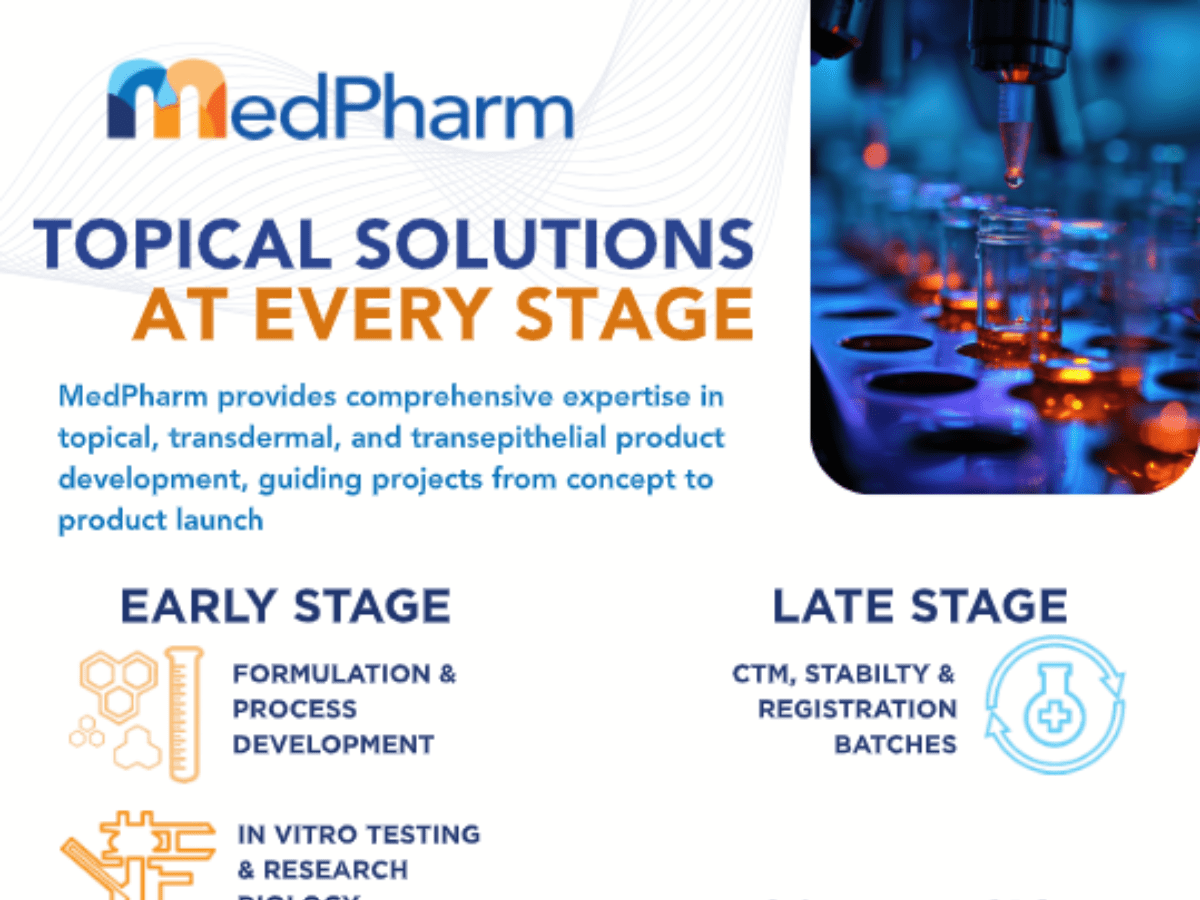
This one-page overview highlights MedPharm’s end-to-end capabilities in topical, transdermal, and transepithelial drug development. From early-stage formulation and in vitro testing through clinical trial material supply and commercial manufacturing, MedPharm supports programs at every stage to accelerate development and reduce risk.
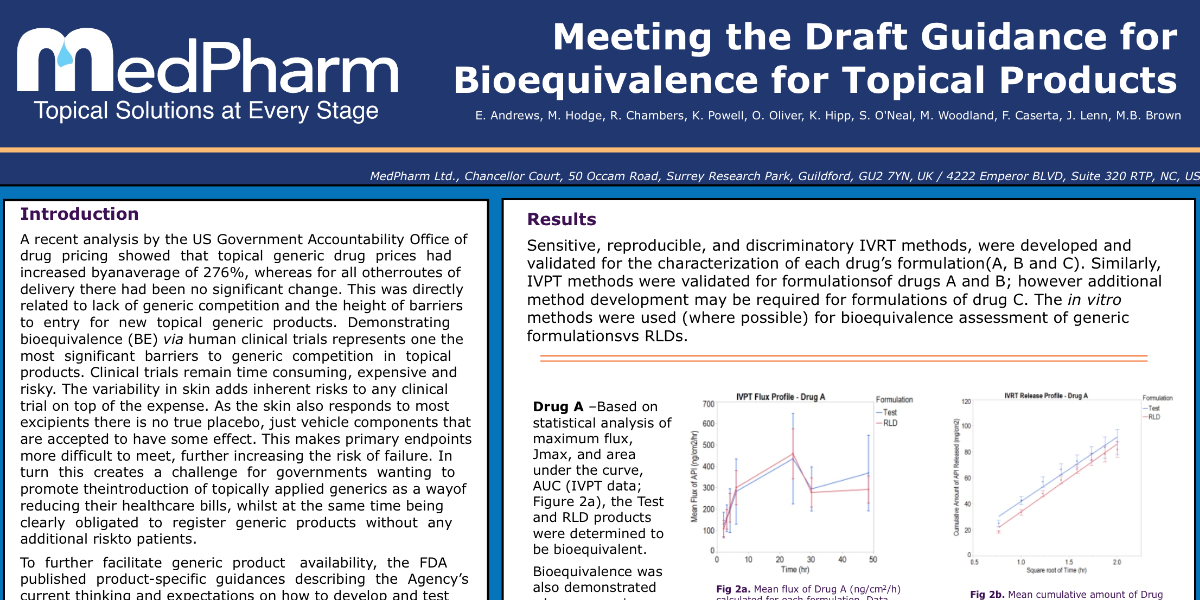
Poster: Meeting the Draft Guidance for Topical Products
Demonstrating the Skin Penetration Potential of a Large Aptamer
This case study shows how MedPharm, in collaboration with GSK and the University of Reading, demonstrated the skin penetration and biological activity of a large aptamer using advanced skin models. The findings challenge traditional molecular weight limits in topical drug delivery and highlight the potential for large-molecule therapies in dermatology.
Proving Pharynx Formulation Equivalence with Clinically Relevant Models
This case study shows how MedPharm worked with Reckitt scientists to develop clinically relevant pharynx models for comparing drug delivery from a throat spray and a lozenge formulation. Using ex vivo and human tissue models, the team demonstrated equivalent flurbiprofen permeation across both dosage forms and supported the determination of a clinically relevant dose. These results enabled confident evaluation of formulation performance and helped inform product strategy.