
Discover how MedPharm’s end-to-end CDMO model supports topical semisolid and liquid drug development from early-stage formulation through commercial manufacturing. Explore how integrating formulation development, IVRT/IVPT, analytical services, stability studies, and GMP manufacturing within one organization helps maintain scientific continuity, reduce development risks, and streamline the path to commercialization.
Olink® Proteomic Analysis at MedPharm

Explore MedPharm’s Olink® proteomic analysis capabilities as an Olink® Certified Service Provider. Learn about available Target, Flex and Focus panels, analysis across a range of sample matrices, minimal sample volume requirements, and Olink® data analysis support.
Olink® 1 PagerAdvancing Proteomic Analysis with Olink® at MedPharm
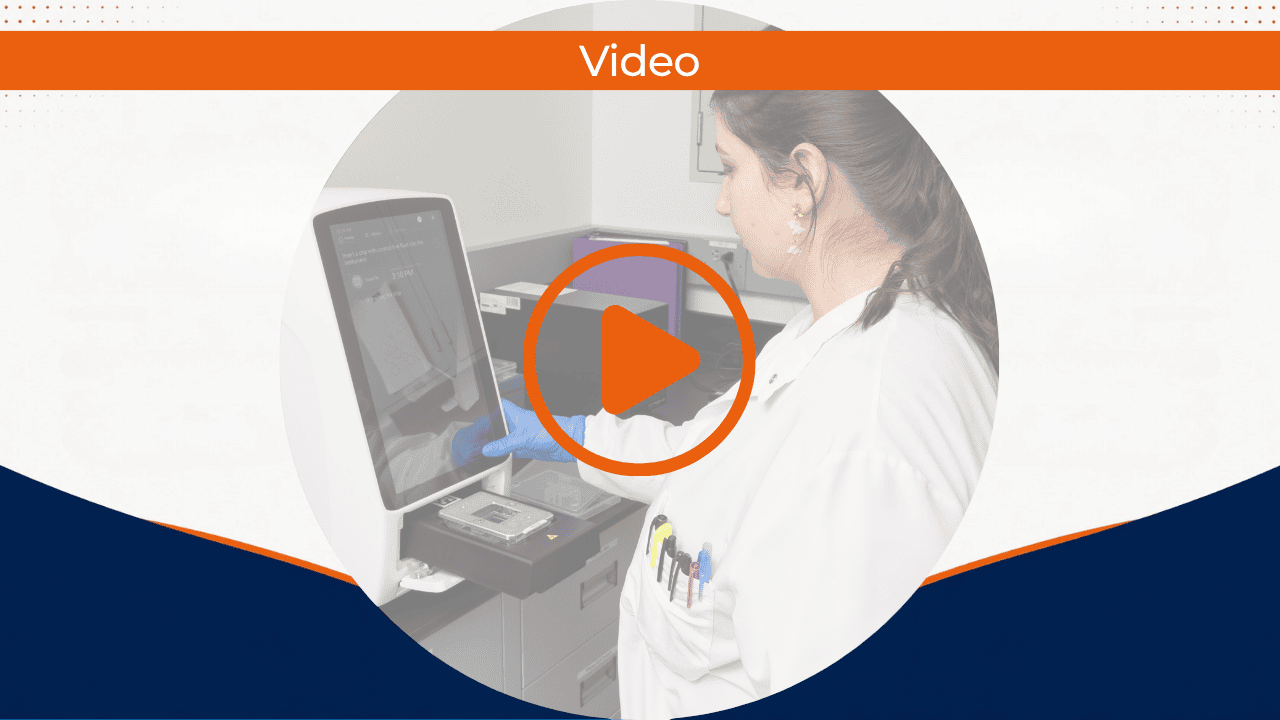
Hear from Wes LaBarge as he introduces MedPharm’s Olink® capabilities and discusses how targeted multiplex proteomic analysis can generate deeper insights from samples to support drug development.
Revisiting the General Solubility Equation: In Silico Prediction of Aqueous Solubility Incorporating the Effect of Topographical Polar Surface Area
Revisiting the General Solubility Equation explores new approaches to improving the in-silico prediction of aqueous solubility, a critical property in pharmaceutical drug discovery and formulation development. The study evaluates the widely used General Solubility Equation (GSE) and demonstrates that incorporating Topological Polar Surface Area (TPSA) alongside traditional descriptors improves the accuracy of solubility predictions across diverse chemical compounds. The findings highlight the value of computational modeling for accelerating early-stage drug development, supporting virtual compound screening, and improving decision-making during pharmaceutical research and formulation design.
Polymeric gels for intravaginal drug delivery
Polymeric Gels for Intravaginal Drug Delivery reviews the formulation strategies, materials, and performance considerations that influence successful vaginal drug delivery. The publication explores how polymeric gel systems can improve drug retention, mucoadhesion, and controlled release while addressing the unique physiological barriers of the vaginal environment. It also examines advances in thermogelling and mucoadhesive formulations, applications in infectious disease, contraception, and women’s health, and the regulatory, safety, and quality considerations required for product development. This review provides valuable insights for scientists developing intravaginal drug products, topical formulations, and advanced drug delivery systems.
Formulation Risk: The Cost of Non-Optimized Vehicles
Formulation challenges are a major but often overlooked source of development delays, clinical setbacks, and increased costs. For complex delivery routes, formulation optimization is critical to product performance, manufacturability, and long-term commercial success.
In this blog, MedPharm explores the impact of formulation risk, common causes of formulation failure, and why a systematic, route-specific development strategy can help reduce risk throughout the product lifecycle.
Alternative Drug Delivery Routes: Opportunities, Challenges, and How to Overcome Them
This article explores the challenges and opportunities of nasal drug delivery, including formulation strategies, biological barriers, and targeting approaches for local and systemic therapies. It also highlights MedPharm’s expertise in preformulation, characterization, and advanced nasal models designed to support successful product development
Unlocking the Potential of Nasal Drug Delivery
This blog explores the challenges and opportunities of nasal drug delivery, including formulation strategies, biological barriers, and targeting approaches for local and systemic therapies. It also highlights MedPharm’s expertise in preformulation, characterization, and advanced nasal models designed to support successful product development
Cosmetic Testing
The global cosmetics market is growing rapidly, driven by consumer demand, social media influence, and interest in science-backed, personalized skincare. As scrutiny of product claims increases, advanced testing is becoming essential. This article highlights the evolving landscape of cosmetic testing and how MedPharm’s Center for Skin Biology supports robust, evidence-based claims.
Advancing Topical Formulations With Innovative Preclinical Models

The high attrition rate in drug development, driven by factors like poor efficacy, safety, and developability, requires a strategic, early-stage approach to minimize risk and cost. Success depends on a robust development strategy and comprehensive characterization aligned with quality standards.
Key Learning Objectives
- Define the principles of topical formulation development and its role in drug success.
- Evaluate the utility of preclinical models, including in silico, in vitro, and ex vivo models, for formulation optimization and candidate selection.
- Develop a robust and phase-appropriate development package that de-risks a program before clinical studies.
A successful formulation approach uses scientific principles and innovative preclinical models to identify candidates with poor developability early, support informed decision-making, and reduce downstream risk.