
Revisiting the General Solubility Equation explores new approaches to improving the in-silico prediction of aqueous solubility, a critical property in pharmaceutical drug discovery and formulation development. The study evaluates the widely used General Solubility Equation (GSE) and demonstrates that incorporating Topological Polar Surface Area (TPSA) alongside traditional descriptors improves the accuracy of solubility predictions across […]
Polymeric Gels for Intravaginal Drug Delivery reviews the formulation strategies, materials, and performance considerations that influence successful vaginal drug delivery. The publication explores how polymeric gel systems can improve drug retention, mucoadhesion, and controlled release while addressing the unique physiological barriers of the vaginal environment. It also examines advances in thermogelling and mucoadhesive formulations, applications […]
This scientific poster explores advanced methods for assessing wound healing using long-term human skin culture models. By combining a novel wounding device with MedPharm’s Skin-Life Extension Preparation (SLEP) and high-throughput pharmacodynamic (HTPD) system, the study demonstrates improved consistency, extended culture duration, and more informative evaluation of inflammation, proliferation, and tissue remodeling in wound healing research.
This scientific poster explores ex vivo human skin as a model of general inflammation, highlighting its use for evaluating inflammatory responses across Th1, Th2, Th17, and LPS pathways. The data demonstrates how human skin models can support pathway differentiation, inhibitor assessment, and more predictive preclinical decision-making in inflammatory drug development.
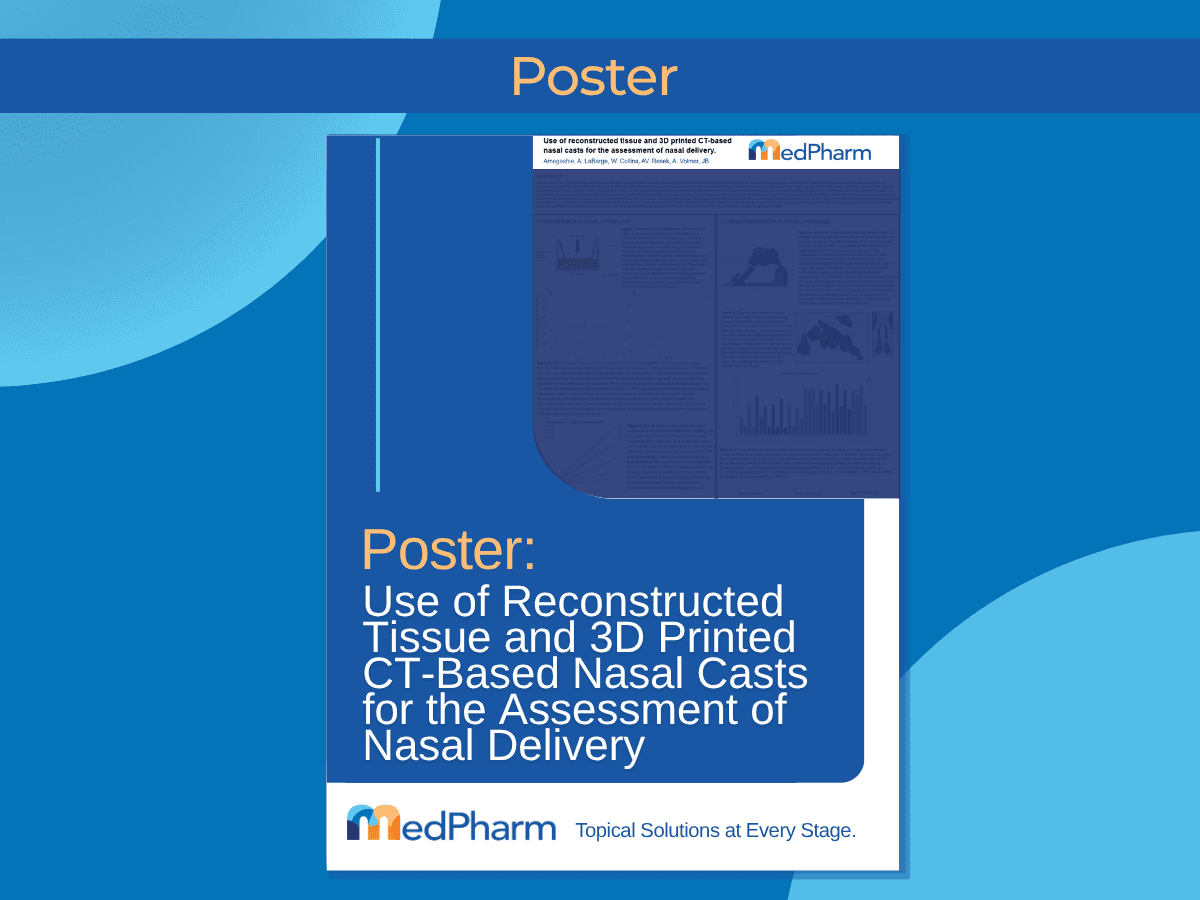
This scientific poster explores advanced in vitro models for nasal drug delivery, including reconstructed nasal epithelium and CT-based 3D printed nasal casts (MedCast®). These approaches enable more predictive assessment of drug permeation, penetration, and regional distribution compared to traditional methods, supporting improved formulation selection and reducing risk in drug development.